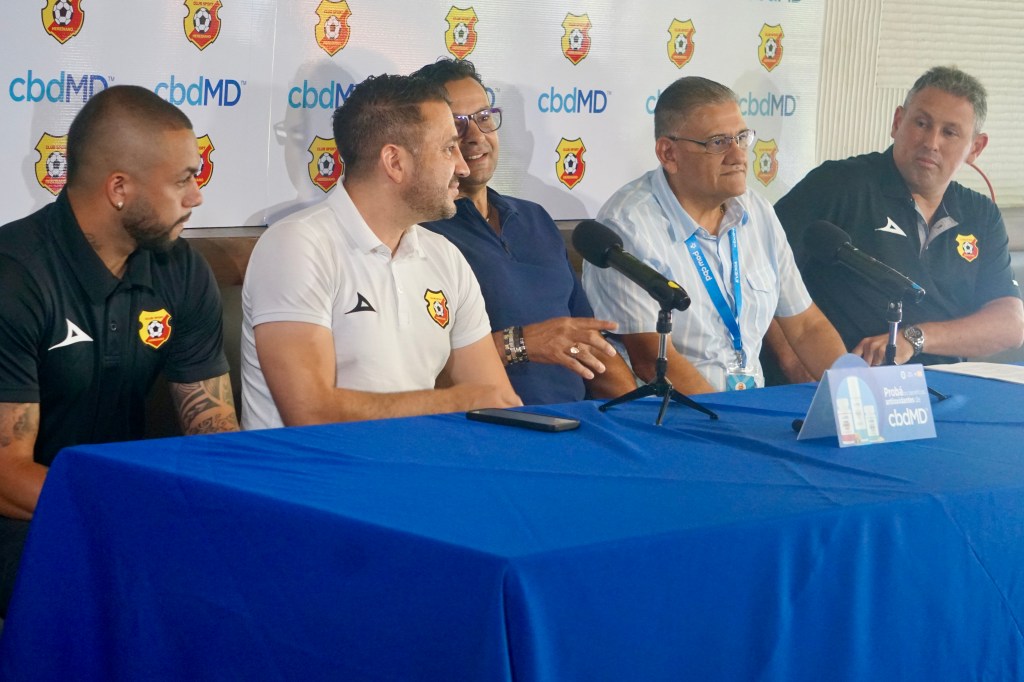
2023: Herediano Professional Soccer Club Sets a New Trend
Update October 12, 2023: I requested Fedefut (National Football Federation) their comments since Heredia had deleted all of their posts about the sponsorship, and like it was stated at the end of this article and in my questions the day of the press conference, Fedefut does not allow their players to use CBD.
I also requested Heredia’s press team their comments but they still have not reply to my email.
————————————————————–
In a groundbreaking development, Costa Rica’s Herediano Professional Soccer Club made waves by becoming the inaugural soccer team to secure sponsorship from cbdMD, a prominent CBD brand. This landmark partnership extends to the male team and embraces the female squad. What distinguishes this collaboration is cbdMD’s assurance that their products will not result in positive doping tests, according to the brand’s representatives.
2018: CBD Finds Favor in the World of Soccer
The pivotal year of 2018 witnessed a crucial shift when the World Anti-Doping Agency (WADA) decided to remove cannabinoids, including CBD, from its list of prohibited substances. In a ripple effect, FIFA also followed suit, rescinding the ban on CBD usage among soccer players. However, a caveat remained – players were permitted to use only those CBD products devoid of detectable levels of THC, the psychoactive component found in cannabis. All other synthetic and natural cannabinoids remained restricted, except for cannabidiol.
2018: USL Forges Ahead
The United Soccer League (USL), often likened to England’s League 1 and League 2, led the way in embracing CBD sponsorship. Way back in 2018, the Las Vegas Lights, a USL team, inked a partnership deal with a cannabis dispensary.
Breaking Conventions in Women’s Soccer
In an industry where change often proceeds at a measured pace, the National Women’s Soccer League (NWSL) in the United States took a pioneering stance by allowing its athletes to utilize cannabinoids like CBD for pain management. This decision is a testament to the leadership of women in sports, and it comes as no surprise, considering their longstanding efforts to combat the opioid pandemic.
2019: Social CBD and Portland Thorns
In 2019, Social CBD, a Portland-based CBD brand, achieved a historic milestone by becoming the first hemp-related brand to collaborate with a professional women’s soccer team in the U.S., the Portland Thorns.
2019: Megan Rapinoe & The Mendi Co.
After a triumphant 2019 FIFA Women’s World Cup campaign, soccer sensation Megan Rapinoe made waves in the CBD industry by inking an exclusive deal with The Mendi Co., a Portland-based CBD company. A vocal proponent of CBD, Megan and her twin sister Rachael, who helms the CBD startup, marked a transformative chapter in the relationship between professional athletes and CBD.
2020: Utah Royals and NC Courage Partner with Mendi
In 2020, the Utah Royals and the two-time reigning league champion NC Courage joined forces with Mendi.
June 2022: Angel City FC & Charlotte’s Web Inc.
In June 2022, Angel City Football Club (ACFC) unveiled a remarkable collaboration with Charlotte’s Web Inc. This pioneering partnership assumed greater significance following the legalization of hemp-derived CBD products in California in 2021.
United Kingdom
2021: Birmingham City Embraces CBD Drinks
In 2021, Birmingham City entered into a 12-month agreement with a CBD drinks company, making their products available throughout the stadium. This development underscores the growing acceptance of CBD within the football realm.
Kicking Off a New Era
The landscape of professional soccer continues to transform, mirroring evolving attitudes and CBD-related regulations. While the collaboration between Herediano and cbdMD marks a remarkable step in the world of soccer sponsorship, we must remain vigilant and watchful as to how they navigate this unique partnership. Notably, the National Football Federation Fedefut has not yet permitted the use of CBD among national team players, and any developments in this regard will undoubtedly impact the future of CBD sponsorship in Costa Rica.
Additionally, the sponsorship must remain in strict compliance with the evolving legal and medical guidelines surrounding hemp in a country where such regulations are yet to be fully established. As we witness the ongoing evolution of CBD’s role in professional soccer, only time will reveal the full extent of its impact on the sport and its athletes.


Leave a Reply